A fading phone battery creates an unusually tempting shopping moment. The handset may still take good photos, run the apps you need and fit comfortably into your life, yet a midday charge or a portable battery can make replacement feel inevitable.
Often, it is not. A battery replacement can be one of the more rational repairs available for a phone that remains secure, supported and otherwise sound. But a cheap-looking battery price is not, by itself, a decision. The useful comparison is between the total cost and disruption of repair and the remaining useful life of the phone you already own.
That means asking four questions before booking anything: is the battery actually the fault, how long will the phone remain viable for your needs, what is the final repair quote likely to include, and what assurance will the repair route provide?
The answer will vary by model, market and condition. The service terms cited below are primarily UK examples from Apple and Huawei; they should not be treated as universal prices or policies for every phone maker.
Start with the phone’s remaining life, not the battery percentage
Battery health is a useful signal, but it is not a universal replacement rule. A percentage on a settings screen describes an estimate of the battery’s remaining capacity relative to when it was new; it does not settle whether the phone is still worth maintaining.
The better starting point is the phone’s remaining life as a device.
A replacement battery is most persuasive when the phone still does the important work: calls, messaging, maps, banking, authentication, accessibility features and the apps you rely on. It also needs a credible path to ongoing software and security updates. A fresh battery in a phone that is already outside the support period may buy convenience, but it cannot restore missing security patches or app compatibility.
Check the support status for your exact model before spending money. Do not infer it from the year you bought the handset, the release date of a similar model or a retailer listing. Manufacturers’ support commitments differ, and they can be expressed in different ways: operating-system upgrades, security updates, or only current-device support pages.
Then consider the phone’s broader condition:
- Is the screen intact and responsive?
- Does the charging port work reliably?
- Are cameras, microphones, speakers and buttons functioning normally?
- Has the phone suffered liquid damage, swelling, repeated overheating or serious drops?
- Are you already anticipating another costly repair?
If the battery is the only meaningful weakness in an otherwise adequate, supported phone, repair can be a straightforward way to avoid changing devices prematurely. If it is one fault among several, the calculation changes quickly.
Apple’s iPhone battery service page makes an important distinction: batteries wear down through normal use, while accidental damage is treated separately under its service terms. In practical terms, ordinary battery ageing is a maintenance issue, not proof that the entire phone has failed.
Confirm that the battery is the problem you are paying to solve
Poor endurance can be caused by battery wear, but it can also be caused by software, charging equipment, a damaged port, poor mobile reception, an app behaving badly, heat exposure or a fault elsewhere in the phone.
Before arranging a repair, try to describe the problem precisely. “It does not last all day” is understandable, but it is less useful to a repairer than a pattern such as: “It loses charge rapidly while idle”, “it shuts down at 30%”, “it becomes unusually hot during charging”, or “it only charges when the cable is held at an angle.”
A few checks can prevent paying for the wrong fix:
- Look for the manufacturer’s battery-health or diagnostic information for your model. Where your phone offers a battery condition message, record it along with the software version.
- Check whether the problem started after an app or software change. A sudden drain is not necessarily the same as gradual battery ageing.
- Inspect cables, chargers and the port. A charging problem may not be a battery problem.
- Note heat, swelling or physical damage. A visibly swollen battery, a lifting screen, smoke, burning smell or severe heat needs prompt professional attention; do not keep charging or attempt a home repair.
- Back up the phone before service. A battery job should not be treated as a guarantee that no data risk exists during diagnosis or repair.
An inspection can also change the price and scope of the work. Apple says it will inspect an iPhone to determine the final service fee and warns that a device may be ineligible for service in some circumstances, potentially requiring a replacement-device charge instead. That is a useful reminder that a published battery price is often an entry point, not a binding diagnosis.
Battery replacement may improve runtime when capacity loss is the cause. It does not necessarily solve unstable software, a worn charging port, damaged power-management components or unusually demanding use. Nor should you assume it will make every phone feel faster. The evidence supplied for this guide does not establish a general performance improvement after replacement.
Compare the complete repair quote, not the headline battery price
The right comparison is rarely “battery price versus new flagship phone.” It is usually “the all-in repair cost versus the cost and disruption of keeping, selling, trading in, buying used or replacing this specific phone.”
Build a complete repair figure before deciding. Ask whether the quote includes labour, taxes, diagnostics, postage, return shipping and any charge for damage discovered after inspection. If you will be without the handset, include the practical cost of borrowing a device, using a spare or changing your routine.
Apple states that its out-of-warranty estimates may be subject to tax, that shipping fees may apply, and that Apple Authorised Service Providers can set their own service fees and estimates. In other words, an authorised route may be convenient and well documented, but the final figure can depend on where and how the service is arranged.
Huawei’s UK battery-replacement service advertises smartphone battery replacement from £59, using official parts, with a 90-day warranty for battery-related problems. That is a specific UK offer, not a benchmark for other brands or countries. Its service page should be read alongside eligibility conditions for the device in question.
For postal service, time matters as much as price. Huawei says its UK postal process generally takes seven to 10 days including logistics and repair, while noting that delays can occur. The company’s service information gives a breakdown of four to six days for round-trip logistics and one to three days for repair. That may be acceptable for a backup-phone household and impractical for someone who relies on one handset for work, travel or two-factor authentication.
Independent price reporting can help identify questions, not replace a live quote. In a January 2026 comparison, Which? reported examples in which third-party battery repairs could be cheaper, though not always. Those examples are dated and model-specific; they are not current universal prices in November 2026.
A simple comparison table can keep the decision grounded:
| Option | Costs to include | What you gain | What to verify |
|---|---|---|---|
| Replace the battery | Final repair fee, tax, shipping, time without phone | More usable daily runtime without changing phone | Exact part, warranty, diagnosis, sealing policy, turnaround |
| Keep the phone for now | Charging inconvenience, possible power bank or charger | No immediate spending or service disruption | Whether the problem is worsening or affecting essential use |
| Sell or trade in | Replacement cost less realistic value of current phone | A newer device and potentially longer support | Current condition, market-specific offer and data-transfer plan |
| Buy a used or refurbished replacement | Purchase price, warranty, battery condition, accessories | A change without paying new-device pricing | Support status, return terms and battery-health information |
Do not assume a trade-in offer is automatically better than repair. Its value depends heavily on the exact model, storage, condition, market and timing. The research available here does not establish current trade-in values, so obtain a live offer before using one in your calculation.
Choose the repair route for assurance, not just the lowest price
There is no universal rule that authorised service is always the only sensible route, or that an independent repair is automatically poor value. The meaningful difference is the assurance attached to the particular quote.
An authorised route can offer a clearer chain of responsibility for parts and service terms. Apple says it guarantees its service and replacement parts for 90 days or for the remaining term of the Apple warranty, whichever is longer. Huawei UK states a 90-day official warranty after its battery-replacement service for battery-related problems.
Those promises are useful, but narrow. They are not blanket guarantees for every pre-existing issue in the phone, and they should be read in the provider’s own terms.
An independent shop may offer faster local service, a lower quote or a repair option for older devices that receive limited manufacturer attention. But the relevant question is not whether it calls itself independent or authorised. It is whether it will put the important terms in writing.
Questions worth asking before handing over the phone
- What is the total expected price, including diagnostics, tax and any additional labour?
- Is the quote conditional on inspection? If so, will you be contacted for approval before extra work begins?
- What battery will be fitted, and what does the provider mean by genuine, original or compatible?
- How long is the warranty, and what faults does it cover?
- What happens if another defect is found after opening the phone?
- How long will the device be away, and is walk-in collection available?
- Do you need to remove a SIM, disable device tracking or prepare the phone in a particular way?
- What steps should you take to back up and protect your data before service?
The lowest quote can be the best choice if its scope is clear and its warranty is meaningful for your needs. A modestly higher quote may be worth it if the provider offers a better diagnosis process, faster turnaround or a service path you can return to if the problem persists.
Water resistance deserves a direct, model-specific question
Many modern phones are marketed with water-resistance ratings, but consumers should be careful about what that means after a repair. The supplied evidence does not establish that battery replacement either preserves or voids water resistance for every model, repairer or repair method.
That uncertainty is itself a reason to ask directly.
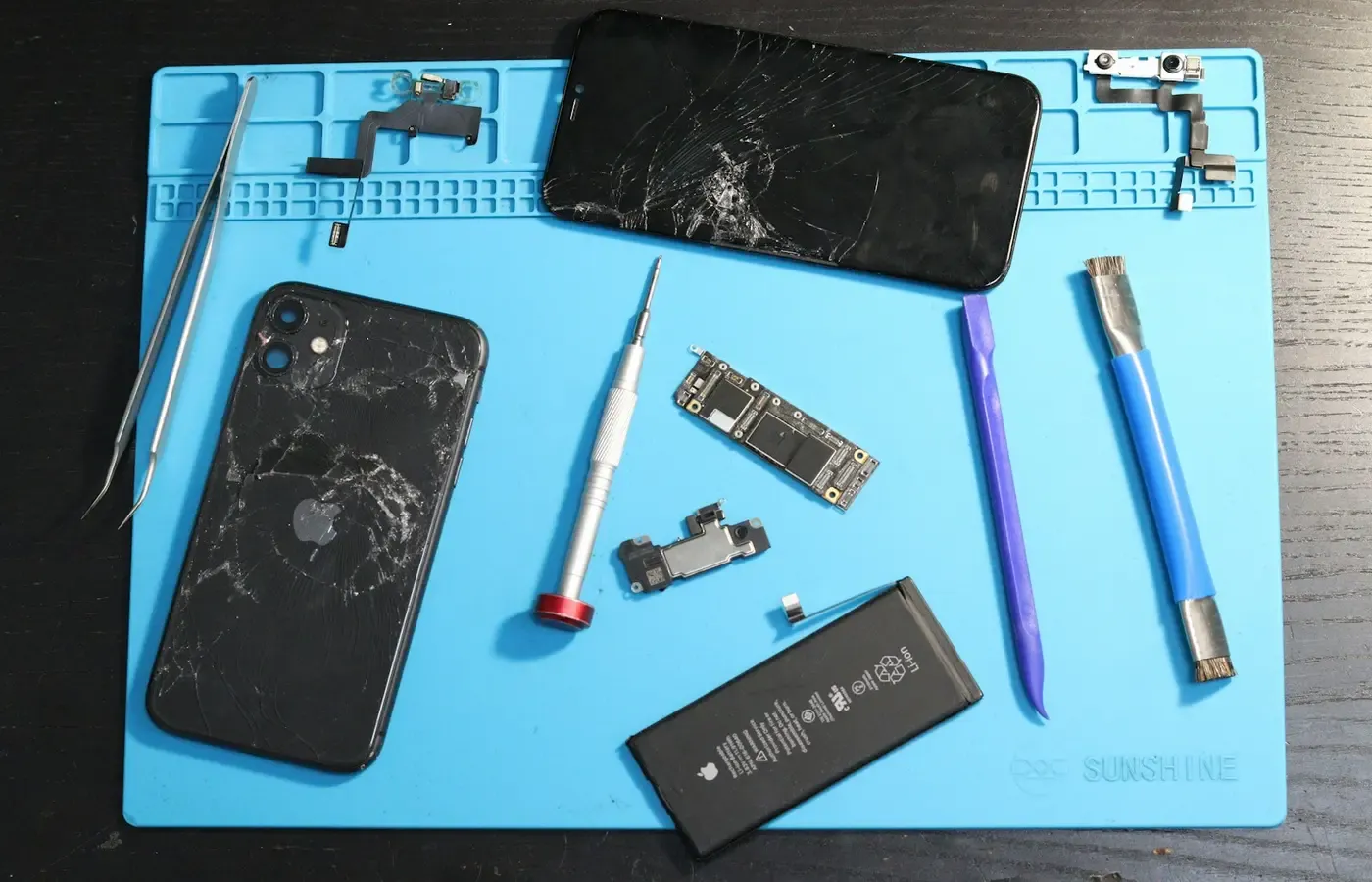
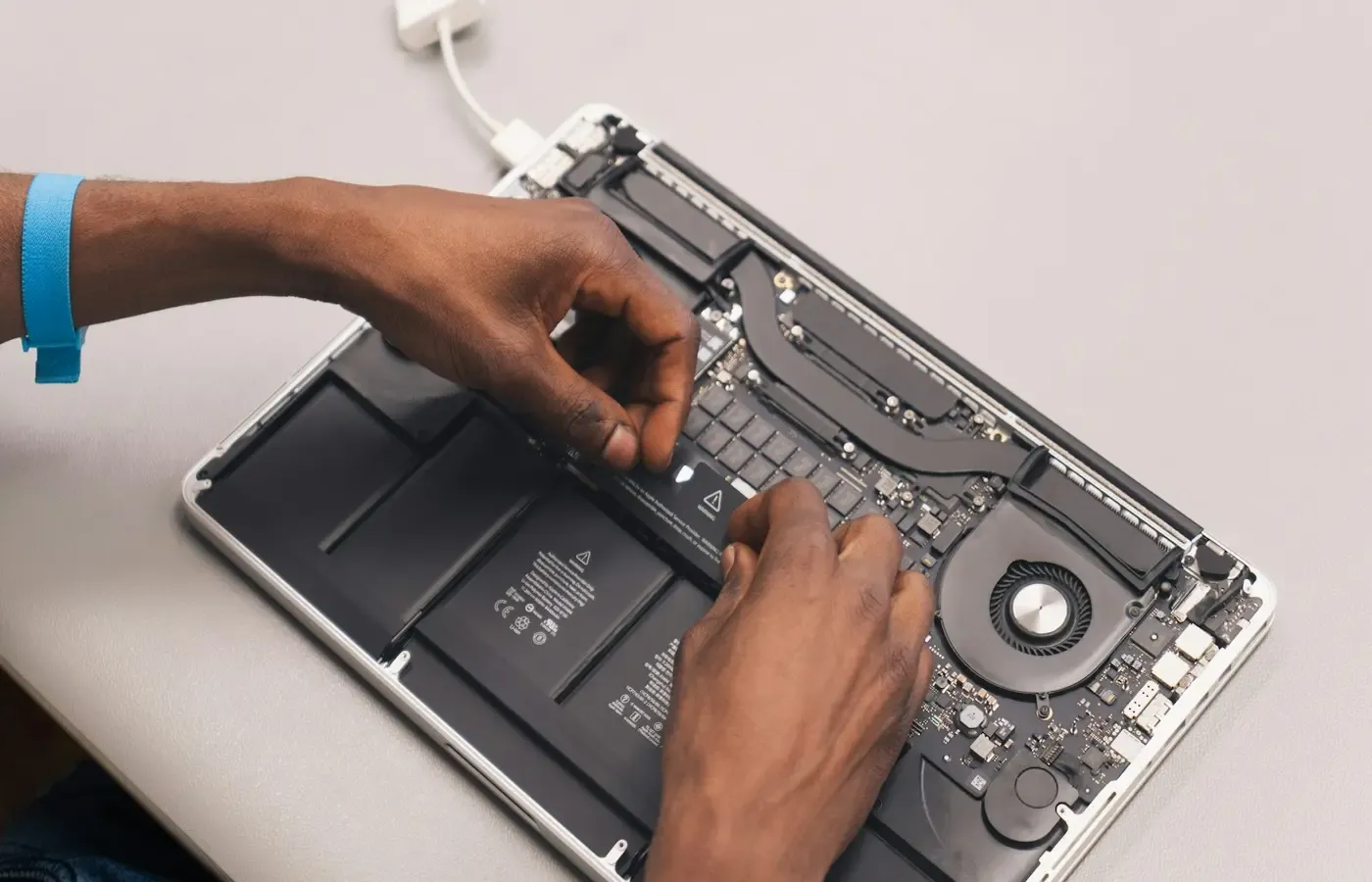
Opening a phone involves separating components that may rely on adhesives, seals and careful reassembly. Existing cracks, frame damage or prior repairs can further complicate the situation. Do not rely on a general statement that a phone was “waterproof” when new; phones are generally described as water-resistant under specified test conditions, not invulnerable to liquid damage in daily life.
Before authorising work, ask the repairer:
- Will you assess the phone for existing frame, screen or back-glass damage?
- What is your policy on water resistance after this battery repair?
- Do you replace relevant seals or adhesives where applicable?
- Do you conduct any post-repair checks related to sealing, and will you document the result?
- Does your repair warranty exclude liquid ingress or damage related to it?
A careful answer is better than a reassuring but vague one. If water resistance is essential to your work, sport or travel, make that requirement explicit before the phone is opened.
A decision card for repair, keeping, or moving on
Replace the battery when: the phone remains supported for the period you expect to keep it, it still meets your daily needs, the fault appears isolated, and the complete repair quote is comfortably lower than the cost and disruption of changing phones.
Keep the phone for now when: shorter runtime is inconvenient but manageable, you need more time to assess the fault, or the repair quote is unclear. A temporary charging routine may be less wasteful than rushing into either repair or replacement.
Consider selling, trading in or buying used when: support is short, multiple expensive faults are accumulating, storage or performance no longer fits your actual needs, or a repair would only postpone a more fundamental change. Get current, model-specific values rather than assuming a trade-in will be generous.
Replace more urgently when: the phone cannot safely or reliably perform essential tasks, receives no security support for services that matter to you, or shows signs such as swelling, severe overheating or physical damage that need professional assessment.
Is phone battery replacement worth it if battery health is below 80%?
It can be, but 80% is not a universal command to repair. Some manufacturers and service plans use battery-capacity thresholds in their own eligibility policies, but the evidence in this guide does not establish 80% as a rule for all phones. Consider the runtime you actually get, the phone’s support status, its overall condition and the final quote.
Will replacing a phone battery make the phone faster?
It may address symptoms tied to an ageing battery in some devices, but it is not a general performance upgrade. If slowdowns come from limited storage, old software, overheating, failing components or demanding apps, a new battery may make little difference. Ask for diagnosis rather than treating battery replacement as a cure-all.
Does battery replacement affect water resistance?
It can be relevant because the phone must be opened, but the outcome depends on the exact model, existing damage and repair process. The research for this guide does not support a blanket claim either way. Ask the provider what it will test, replace and warrant after repair.
Is an authorised phone battery replacement better than an independent repair?
Authorised service can offer manufacturer-linked parts and published service terms; Apple and Huawei UK, for example, each describe 90-day battery or service guarantees in the cited materials. An independent repair may still be a sensible option if its quote, parts description, warranty and post-repair support are clear. Compare the actual provider, not the label alone.
Sources & methodology
This guide uses manufacturer service documentation for what Apple and Huawei say about their own service processes, costs and warranties, and independent reporting only as dated price context. It does not claim first-hand testing, establish current prices for all brands, or make model-specific claims about software support, restored battery life, repair quality or water resistance.
- Apple, Service and Repair for iPhone Battery: inspection, estimated-fee, shipping, authorised-provider and 90-day service-guarantee terms.
- Huawei UK, Battery Replacement Service: advertised UK pricing from £59 and 90-day battery-related warranty.
- Huawei UK, Official Battery Replacement Service information: stated postal-repair timing and process.
- Which?, Mobile phone repair: how to fix your smartphone: attributed UK price examples reported as correct in January 2026.
Before booking, verify current terms with the provider for your exact phone, location and repair route.